
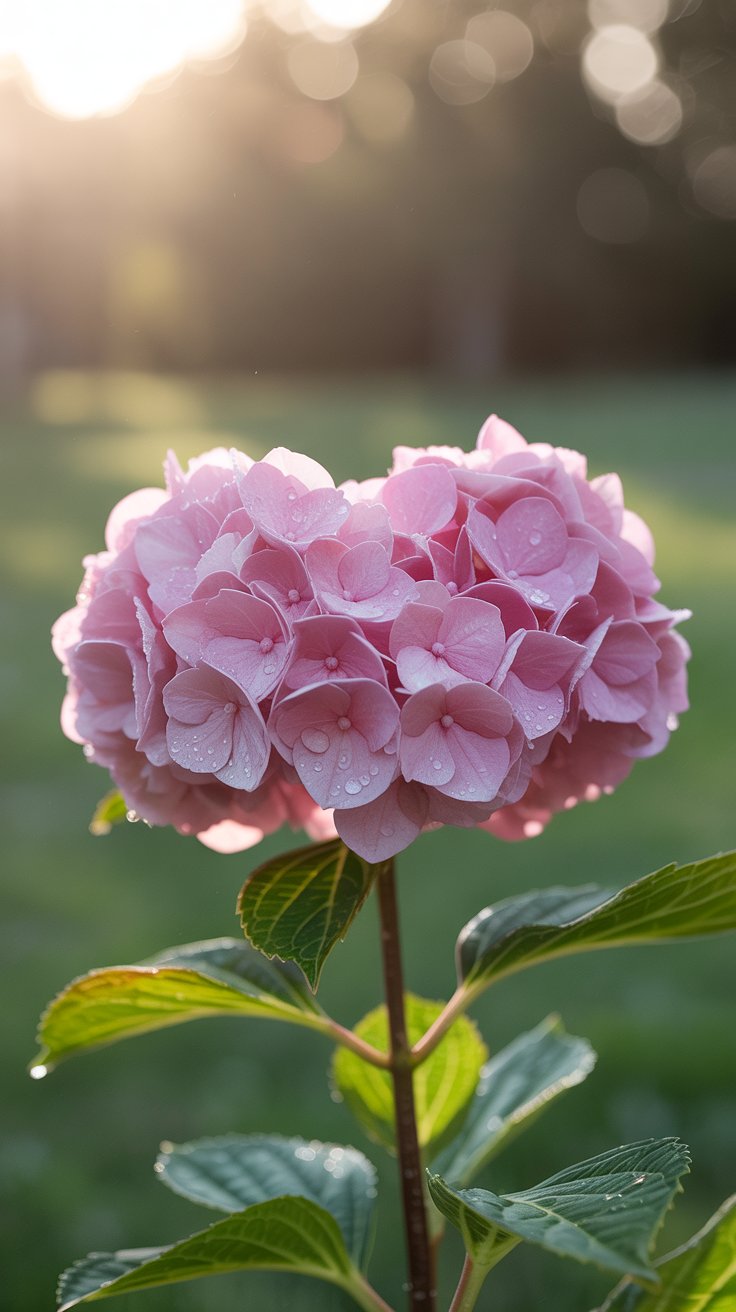
Big leaf Hydrangeas
The Bigleaf Hydrangea (Hydrangea macrophylla) is one of the most eye-catching flowering shrubs for home gardens. Known for its large mophead or lacecap blooms, it’s perfect for adding lush color and texture to shaded borders, patios, and containers.
This guide covers everything you need to know — from planting and watering to pruning and pH color changes — to keep your bigleaf hydrangea thriving year after year.
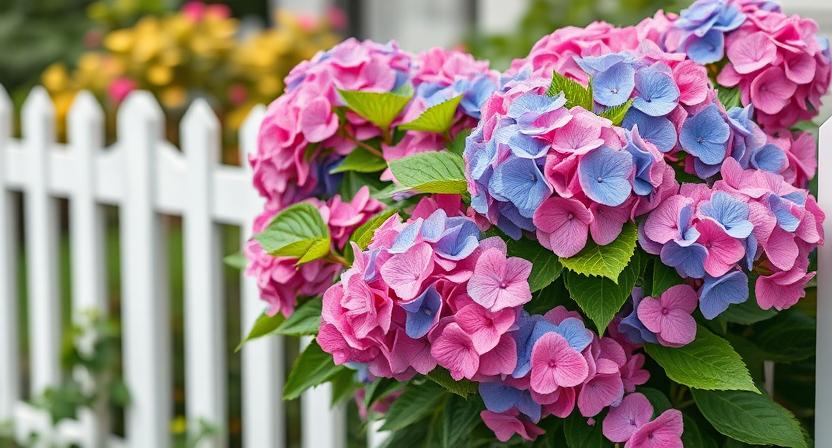
What Makes Bigleaf Hydrangea Special
Bigleaf hydrangeas are loved for their:
- Oversized, vibrant flower clusters
- Ability to change color based on soil pH
- Lush, glossy green foliage
- Long bloom time from early summer to fall
Fun fact: The flower color changes — pink in alkaline soil and blue in acidic soil — make it one of the few shrubs you can “customize” naturally!
Best Location & Light Requirements
Bigleaf hydrangeas prefer partial shade, especially morning sun and afternoon shade.
Too much direct sun can cause wilting or scorched leaves. If you live in a hot climate, filtered sunlight or dappled shade is ideal.
Quick Tip:
Avoid deep shade — they may grow leaves but won’t produce many blooms.
Soil and Planting
For best results, plant your bigleaf hydrangea in moist, well-draining, rich soil.
Mix in compost or leaf mold to improve soil texture and fertility.
pH and Flower Color:
- pH < 6.0 (acidic): Blue flowers
- pH 6.0–7.0 (neutral): Purple to lavender
- pH > 7.0 (alkaline): Pink to red flowers
To change flower color naturally, amend soil with:
- Aluminum sulfate for blue blooms
- Garden lime for pink blooms
Watering and Moisture
Bigleaf hydrangeas love consistent moisture, but never soggy soil.
- Water deeply once a week.
- Increase frequency during heat waves.
- Add 2–3 inches of mulch around the base to retain moisture.
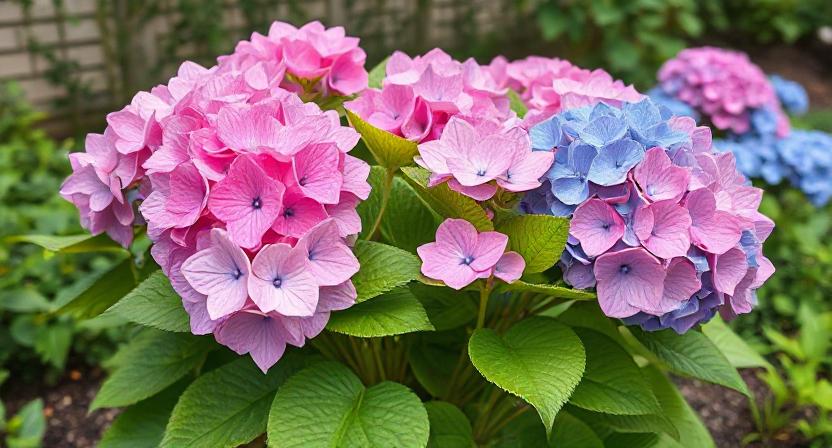
Avoid: Letting soil dry out completely — the leaves will droop quickly when thirsty.
Fertilizing
Feed your bigleaf hydrangea twice a year:
- Early spring — before new growth starts.
- Mid-summer — after first blooms appear.
Use a balanced, slow-release fertilizer (10-10-10) or a hydrangea-specific formula. Avoid over-fertilizing; too much nitrogen promotes leaves instead of flowers.
Pruning Tips
Most bigleaf hydrangeas bloom on old wood, meaning buds form the previous year.
To avoid cutting off next season’s blooms:
- Prune immediately after flowering (mid-summer).
- Remove dead, weak, or crossing stems.
- Don’t prune in fall or spring — you’ll lose flowers!
Tip: If you have a reblooming variety (like Endless Summer), light pruning is fine throughout the season.
Common Problems & Solutions
| Problem | Cause | Solution |
|---|---|---|
| No blooms | Pruned too late, winter damage | Avoid pruning after July; protect in winter |
| Wilting leaves | Underwatering or full sun | Move to partial shade; water deeply |
| Yellow leaves | Overwatering or poor drainage | Improve soil drainage, reduce watering |
| Fungal spots | Poor air circulation | Space plants, remove affected leaves |
Landscape Uses
Bigleaf hydrangeas are perfect for:
- Foundation plantings along the house
- Mixed borders with ferns, hostas, and astilbes
- Container gardens for patios and porches
- Cut flower arrangements and dried décor
Winter Care
In colder zones (below USDA Zone 6), bigleaf hydrangeas need winter protection.
- Add a 6-inch mulch layer over the root zone.
- Wrap the plant loosely with burlap if exposed to strong winds.
- Avoid heavy pruning before winter.