
Leave the Leaves? What to Do With Fall Leaves in Canada
Quick answer: Yes, in most cases you should leave the leaves, or at least most of them. Fallen leaves feed your soil, insulate plant roots and shelter overwintering pollinators and other insects. The best approach is to leave the leaves on garden beds, mulch-mow a thin layer into your lawn, and compost or shred the rest. Remove leaves only where thick, wet mats would smother grass, or from driveways, sidewalks and storm drains.
Key takeaways
- To leave the leaves doesn't mean leaving a thick, soggy blanket on your lawn. Shred them or move them to beds.
- Leaves are free mulch and fertilizer, worth far more in your garden than in a yard waste bag.
- Many butterflies, moths, bees and beneficial insects spend winter in leaf litter.
- Rake leaves off hard surfaces and away from storm drains, and remove leaves from diseased fruit trees.
Table of Contents
Why leave the leaves?
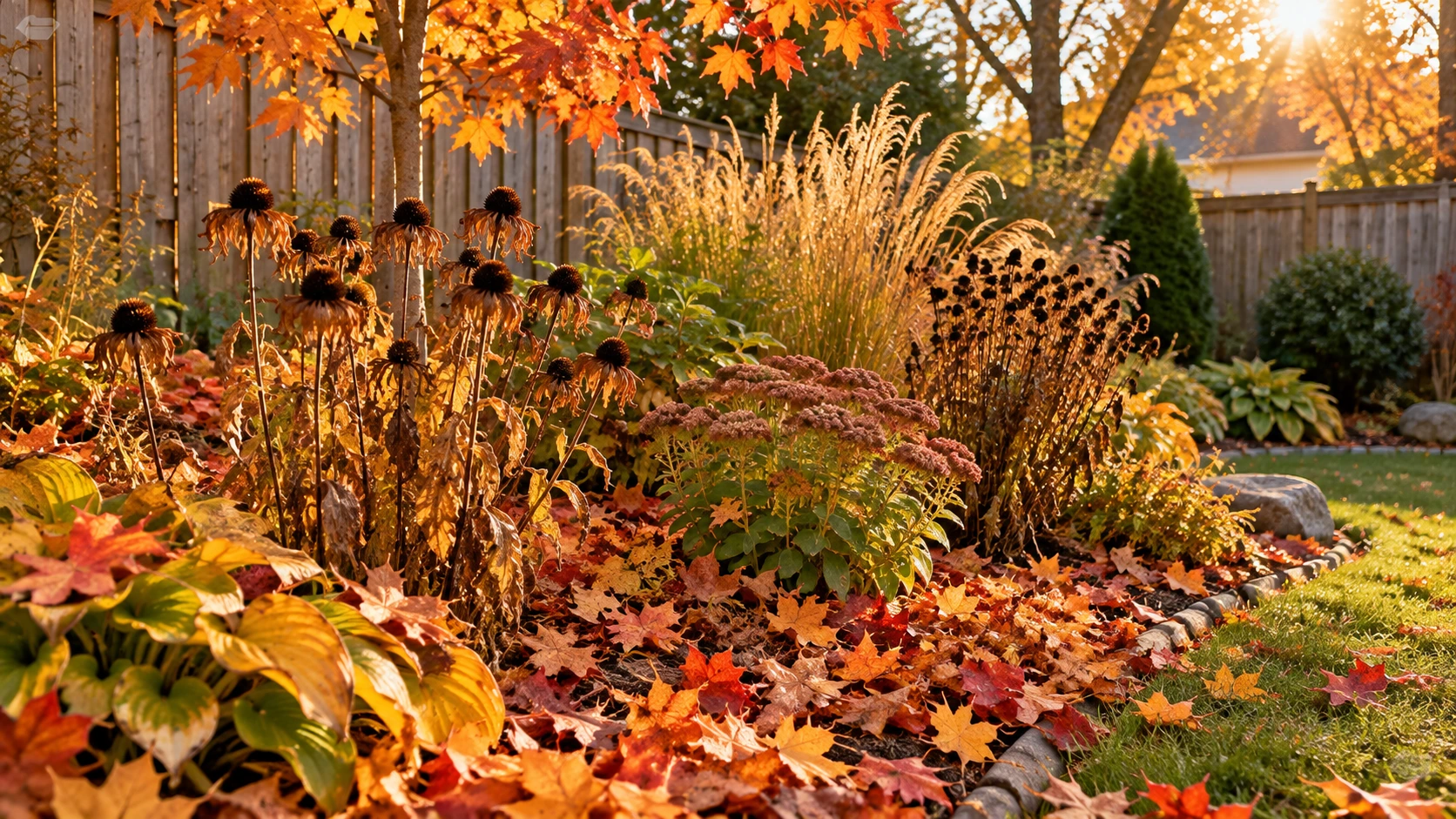
In a forest, nobody rakes. Leaves break down where they fall and build rich, spongy soil. Your yard works the same way. When you leave the leaves, you get:
- Free nutrients: Decomposing leaves return nutrients and organic matter to the soil.
- Natural mulch: A leaf layer holds moisture, suppresses weeds and insulates roots through freeze-thaw cycles.
- Wildlife habitat: Leaf litter shelters caterpillars, beetles, spiders, native bees and the birds that feed on them.
- Less work and waste: Fewer bags at the curb, and less time raking.
The David Suzuki Foundation and university extension experts, such as the University of Maryland Extension, encourage homeowners to leave the leaves for these reasons.
7 easy ways to use fall leaves
- Leave them on garden beds. Rake or blow leaves into perennial and shrub beds as a 5–10 cm natural mulch. Keep them a few centimetres away from tree trunks and woody stems.
- Mulch-mow them into the lawn. Run your mower over leaves on the grass until the pieces are about the size of a fingernail. You should still see grass between the pieces. Shredded leaves break down fast and feed the lawn.
- Shred them for mulch. Mow leaves with a bagging mower, or use a leaf shredder, then spread them around vegetables, trees and shrubs. Shredded leaves are less likely to mat.
- Add them to compost. Leaves are the perfect "brown" ingredient. Store a few bags beside your bin to cover kitchen scraps all winter. See our guide to composting in Canada.
- Make leaf mould. Pile leaves in a corner, or pack them into a wire cage or bag, and keep them damp. In 1–2 years they become crumbly, moisture-holding leaf mould, a superb soil conditioner.
- Insulate tender plants and garlic. Once the ground starts to freeze, use shredded leaves as winter mulch over garlic beds and newly planted perennials. See when to plant garlic in Ontario.
- Create a pollinator corner. Leave an undisturbed patch of leaves, plus some standing perennial stems, for overwintering bees, butterflies and moths. It pairs perfectly with milkweed for monarchs.
When you shouldn't leave the leaves
To leave the leaves doesn't mean ignoring every leaf. Rake or remove them:
- From lawns under thick, wet mats. A heavy layer can block light and encourage snow mould. Shred it or move it to beds.
- From driveways, sidewalks and decks, where wet leaves get slippery.
- Away from roads and storm drains. Leaves that wash into drains can cause flooding and add excess nutrients to streams. Many municipalities also ban raking leaves onto the street.
- Under diseased fruit trees. Collect leaves from apple or crabapple trees with scab, and from other plants with serious leaf diseases, to reduce reinfection next spring. Put them in your municipal yard waste collection rather than your home compost.
- Black walnut leaves in large amounts, which contain a compound that can harm some plants. Compost them separately or use them sparingly.
Leave the leaves on beds vs lawn: quick guide
| Where | What to do |
|---|---|
| Perennial and shrub beds | Leave a 5–10 cm layer |
| Vegetable beds | Shred and spread, or compost |
| Lawn, light leaf cover | Mulch-mow into the grass |
| Lawn, heavy leaf cover | Mulch-mow in passes, or move the extra to beds or compost |
| Hard surfaces and street | Rake and use elsewhere |
| Diseased fruit tree leaves | Bag for municipal yard waste |
Fitting it into your fall cleanup
When you leave the leaves, your fall cleanup gets shorter, not longer. Combine it with the other tasks on our Ontario fall garden checklist. In spring, wait until daytime temperatures are consistently above about 10°C before tidying beds, so overwintering insects have a chance to emerge.
FAQ: leave the leaves
Will leaving leaves on my lawn kill the grass?
A thick, wet, unbroken layer can. A thin layer of shredded leaves won't, and it actually feeds the lawn. Mulch-mow until you can see grass between the leaf pieces.
Do leaves attract pests or rodents?
A leaf layer on garden beds isn't a significant attractant. Keep leaf piles and compost a little way from your house's foundation, and don't pile leaves against tree trunks.
When should I clean up leaves in spring?
Wait until daytime temperatures are consistently above about 10°C, usually May in much of Ontario, so overwintering pollinators can emerge first. Then pull back leaves from around emerging plants and use them as mulch.
Can I put leaves in my green bin?
Most Ontario municipalities collect leaves separately as yard waste, in paper bags or bins, rather than in the green bin. Check your city's yard waste rules and collection dates.
Pingback: How to Store Root Vegetables: 7 Proven Winter Methods