
How to Store Root Vegetables Over a Canadian Winter
Quick answer: Here's how to store root vegetables through a Canadian winter. Keep carrots, beets, parsnips and turnips cold and humid: just above freezing (about 0–4°C) with high humidity, packed in damp sand or perforated bags. Store potatoes dark and cool (roughly 5–10°C). Keep onions and garlic cool and dry. Harvest on a dry day, don't wash, and store only perfect, undamaged vegetables. Many root crops will then last for months.
Key takeaways
- Different crops need different conditions. Most root crops like it cold and moist, but onions like it cool and dry.
- Don't wash root vegetables before storing them. Brush off soil and trim the tops.
- Keep apples and pears away from stored vegetables. The ethylene gas they release can make carrots bitter and potatoes sprout.
- A cheap thermometer-hygrometer is the best tool for getting storage right.
Table of Contents
How to store root vegetables: conditions at a glance
| Crop | Temperature | Humidity | Notes |
|---|---|---|---|
| Carrots, beets, parsnips, turnips, rutabagas | About 0–4°C | High (90–95%) | Damp sand or perforated bags |
| Potatoes | About 5–10°C | High (about 90%) | Total darkness; cure first |
| Onions and garlic | About 0–4°C | Low (60–70%) | Cure until necks are dry; good airflow |
| Winter squash and pumpkins | About 10–15°C | Moderate | Cure first; keep off cold floors |
| Cabbage | About 0–4°C | High | Store away from other vegetables (strong odour) |
Exact ranges vary a little between sources. University extension guides, such as the University of Minnesota's harvesting and storing guide and Iowa State's winter storage vegetables guide, give detailed charts for cold-climate gardeners.
Before you store root vegetables: preparation
Learning how to store root vegetables starts at harvest time.
- Harvest on a dry day, before the ground freezes hard. In much of southern Ontario, that's October to early November.
- Handle gently. Bruised or cut vegetables rot first and can spoil the rest.
- Don't wash. Let the soil dry and brush off clumps.
- Trim the tops of carrots and beets to about 1–2 cm. Leaving long greens draws moisture out of the roots.
- Cure potatoes for 1–2 weeks somewhere dark, around 10–15°C and humid, so small wounds heal and the skins toughen.
- Cure onions and garlic in a warm, airy spot until the necks are completely dry.
- Sort carefully. Store only perfect vegetables, and eat damaged ones first.
How to store root vegetables: 7 proven methods
1. Root cellar or cold room
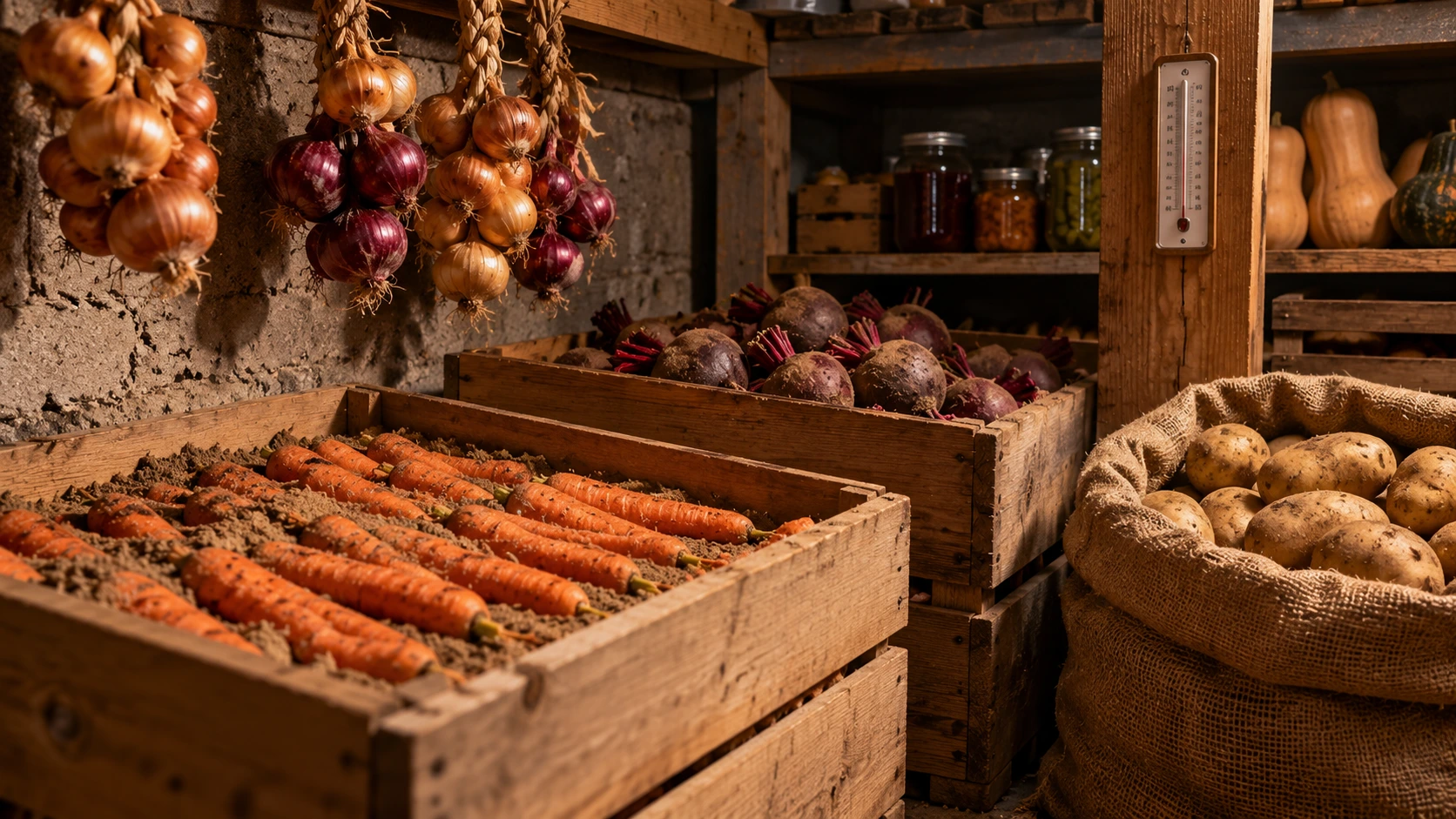
The classic method. An unheated cold room in a basement, with outside air ventilation, often stays close to ideal for root crops through an Ontario winter. Use the floor for the coldest crops, and shelves higher up for potatoes.
2. Boxes of damp sand or sawdust
Layer unwashed carrots, beets and parsnips in a wooden box or plastic tote with slightly damp sand, peat or sawdust, so roots don't touch. Store the box somewhere cold but frost-free. This is the best way to store root vegetables if you don't have a root cellar.
3. Perforated bags in the refrigerator
For small harvests, put root vegetables in perforated plastic bags in the crisper drawer. They'll keep for weeks to a few months.
4. Cool, dark spots for potatoes
Use paper bags, burlap sacks or slatted crates in a dark basement corner. Light turns potatoes green, and green parts shouldn't be eaten. Very cold storage can make some potatoes taste sweet.
5. An attached garage (with care)
An attached, insulated garage can work for root crops in coolers or insulated bins, but temperatures can drop below freezing in a cold snap. Use a thermometer and move crops in during deep cold.
6. Leave them in the ground
Carrots and parsnips can stay in the garden under a thick layer of straw or shredded leaves. Mark the rows and dig as needed until the ground freezes solid. Parsnips actually taste sweeter after frost.
7. Freeze, can or dehydrate
For vegetables that won't store fresh, blanch and freeze them, pressure-can them following tested recipes, or dehydrate them.
How to store root vegetables: what not to do
- Don't store with apples or pears. Their ethylene gas shortens storage life.
- Don't let crops freeze. Frozen roots turn mushy when thawed.
- Don't store potatoes and onions together. Keep them apart for longer storage.
- Don't forget to check. Look over stored vegetables every week or two, and remove anything soft or sprouting.
Grow more to store next year
Knowing how to store root vegetables is only half the job. Long-keeping varieties make storing easier. Plan your storage crops with our Ontario vegetable planting calendar. Don't forget fall garlic, either: see when to plant garlic in Ontario. And add trimmed tops and spoiled vegetables to your compost. See composting in Canada.
FAQ: how to store root vegetables
How long do stored carrots last?
In cold, humid conditions such as damp sand in a cold room, carrots can often keep for several months. In a fridge crisper, expect a few weeks to a couple of months.
Can I store root vegetables in a basement?
Yes, if it's cool. Most heated basements are too warm for carrots and beets, but an unheated cold room or a cool corner can work well for potatoes, squash and onions.
Should I wash carrots before storing them?
No. Brush off the soil and leave them unwashed. Washing removes the protective layer and adds moisture that encourages rot.
Why are my stored potatoes sprouting?
They're too warm, too bright, or stored near apples or onions. Move them somewhere cooler and darker, and keep them away from fruit.