
Overwintering Geraniums, Rosemary and Other Tender Plants Indoors
Quick answer: Overwintering geraniums in Canada is easy. Bring the plants indoors before the first frost, when nights drop below about 10°C. Then keep them one of three ways: as a sunny houseplant, as rooted cuttings, or dormant and bare-root in a cool basement. Rosemary, lemon verbena and other tender perennials need a cool, bright window and careful watering until spring.
Key takeaways
- Bring tender plants in before the first frost. In most of southern Ontario, that's late September to mid-October.
- Check every plant for pests and quarantine it for two weeks before it joins your houseplants.
- A south window is best for overwintering geraniums. If you only have a north or east window, add a small LED grow light.
- Water less in winter. Most tender plants die from soggy soil indoors, not from dry soil.
Table of Contents
Why overwintering geraniums is worth it
Geraniums (technically Pelargonium), rosemary, fuchsia, coleus and lemon verbena can't survive an Ontario winter outdoors. Most of them can live for years if you give them a winter break indoors. Overwintering geraniums saves you money every spring, and an older geranium has a thicker stem and blooms more than a new one from the garden centre.
When to start overwintering geraniums in Ontario
Watch the overnight lows, not the calendar. Start moving plants when nights regularly dip below 10°C, and get everything in before the first frost. For most of the GTA and southwestern Ontario, that window is late September to mid-October. In cottage country and northern Ontario it can be early September.
If you're not sure of your frost date, see our guide to last frost dates in Ontario. The first fall frost is listed there too.
Tip: Move plants into a shaded spot outdoors for a week first. The drop from full sun to indoor light is a shock, and a gradual move cuts down on yellow, dropped leaves.
Step 1: Debug before you bring anything inside
Pests that are harmless outdoors can explode indoors, where there are no predators. Before a plant crosses the threshold:
- Inspect it. Check under leaves and along stems for aphids, whiteflies, spider mites (fine webbing) and mealybugs (white fluff).
- Hose it down. A firm spray of water knocks off most hitchhikers.
- Treat it if needed. Spray insecticidal soap on any infested plant and repeat after a week.
- Check the soil. Soak the pot in a bucket of water for 15 minutes to flush out ants, slugs and earwigs.
- Quarantine it. Keep new arrivals away from your other houseplants for two weeks.
Three methods for overwintering geraniums
University extension services describe the same three approaches. See the University of Illinois Extension guide and Iowa State University's overwintering FAQ. Pick the method that suits your space.
Method 1: Keep them growing as houseplants
This method works best if you have a sunny south or west window.
- Cut plants back by about a third so they fit the window and don't get leggy.
- Put them in the brightest window you have, ideally in a cool room (15–18°C).
- Water only when the top 2–3 cm of soil is dry.
- Skip fertilizer until late February, then give a weak dose every two weeks.
You'll get leggy stems by March. That's normal. Pinch them back in early spring and they'll bush out.
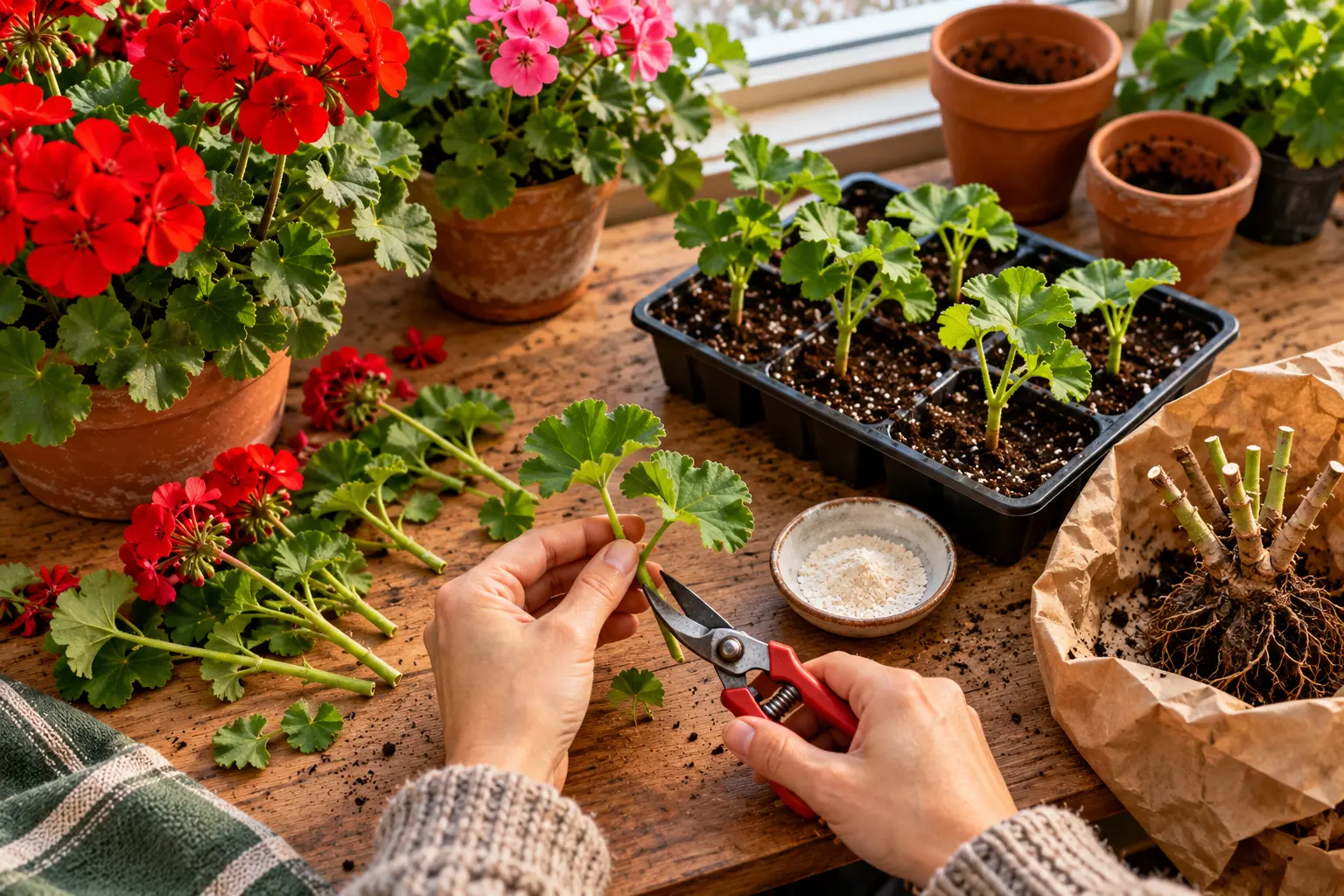
Method 2: Take cuttings
Overwintering geraniums as cuttings is best if you're short on space.
- Cut 10–15 cm pieces from healthy stem tips, just below a leaf node.
- Strip the lower leaves and let the cut ends dry for a few hours.
- Dip the ends in rooting hormone (optional) and stick them in moist potting mix or perlite.
- Keep them bright but out of hot direct sun. Roots form in 3–6 weeks.
A single windowsill can hold a dozen cuttings, which is enough to fill your planters next May.
Method 3: Store them dormant and bare-root
This is the old-fashioned way of overwintering geraniums, and it needs no light at all.
- Dig the plants up before frost and shake off most of the soil.
- Cut the stems back to about 15 cm.
- Hang them upside down, or put them loosely in paper bags, in a cool, dark, dry place. An unheated basement or cold room around 5–10°C works well.
- Once a month, check for rot. If the stems shrivel badly, soak the roots in water for an hour.
- In March, pot them up, water them and move them to a bright window.
Not every plant survives this method. Expect to lose a few, but it costs nothing.
Overwintering rosemary indoors
Rosemary is the tender plant Canadians most often lose indoors. The usual causes are overwatering and warm, dry rooms.
- Light: Give it the sunniest window you have. A small grow light helps a lot.
- Temperature: Cool is best (10–16°C). An unheated sunroom or a cool bedroom works well.
- Water: The trick is to never let it dry out completely and never let it sit wet. Check the pot weekly.
- Air: Powdery mildew is common indoors. Space plants out and run a small fan now and then.
Other tender plants to save alongside your geraniums
| Plant | Best method | Notes |
|---|---|---|
| Geranium (Pelargonium) | Houseplant, cuttings, or dormant | The easiest of all |
| Rosemary | Houseplant | Needs cool temperatures and bright light |
| Coleus | Cuttings | Roots in a glass of water |
| Fuchsia | Dormant in a cool basement | Cut back hard and water lightly once a month |
| Lemon verbena | Dormant or houseplant | Drops its leaves indoors, then regrows in spring |
| Tuberous begonia | Dormant tubers | Dry the tubers and store them in peat or vermiculite |
| Bay laurel | Houseplant | Watch for scale insects |
| Hibiscus (tropical) | Houseplant | Expect some leaf drop at first |
Light and watering when overwintering geraniums
Winter light in Canada is weak and short. In December, Toronto gets about nine hours of daylight. If your plants stretch toward the glass, add an inexpensive LED grow light on a timer for 12–14 hours a day. Our guide to low-light houseplants explains what to expect from north- and east-facing windows.
Furnace air is also very dry. For ways to raise humidity without a humidifier, see houseplants for dry Canadian winter air.
Moving plants back outside in spring
After your last frost date, harden plants off over 7–10 days. Start with a couple of hours in shade and work up to full sun. Plant them out once nights stay above about 10°C. In most of the GTA, that's around Victoria Day weekend.
FAQ about overwintering geraniums
Can I leave geraniums in the garage over winter?
Only if the garage stays above freezing. Most Ontario garages drop below 0°C in January, which kills geraniums. A cold basement or cold room is a safer place for overwintering geraniums.
Why are my overwintered geraniums turning yellow?
Some yellowing in the first few weeks is just the plant adjusting to lower light. Ongoing yellowing usually means overwatering. Let the soil dry more between waterings.
Can I overwinter rosemary outside in Ontario?
Most rosemary isn't reliably hardy in Ontario. Some cultivars sold as "hardy" may survive in a sheltered spot in the mildest parts of southern Ontario, but bringing it in is the safer bet.
Do I need to fertilize geraniums in winter?
No. Plants grow very little in winter, so stop feeding them from November to February. Start again with a weak dose when you see new growth in late winter.
Getting your yard ready too? Work through our Ontario fall garden checklist.
Pingback: 10 Best Houseplants for Dry Air: Easy, Proven Winter Picks