
Gardening for Mental Health: 7 Proven Benefits and Simple Ways to Start
Quick answer: Gardening for mental health works. A large research review found that gardening is linked to lower stress, anxiety and depression and to better mood, life satisfaction and sense of community. Even 20–30 minutes outdoors with plants a few times a week can help. In a Canadian winter, houseplants, windowsill herbs and seed starting keep the benefits going until spring.
Key takeaways
- Research links gardening to lower stress, anxiety and depression, and to better mood.
- Gardening for mental health combines three proven boosters: time in nature, gentle exercise and a sense of purpose.
- You don't need a big yard. A balcony pot or a windowsill counts.
- Gardening supports well-being, but it doesn't replace professional care. If you're struggling, reach out to your doctor or a mental health professional.
Table of Contents
What the research says about gardening for mental health
In a 2017 meta-analysis published in Preventive Medicine Reports, researchers combined the results of 22 studies on gardening and health. They found consistent positive effects, including reductions in depression and anxiety and improvements in life satisfaction, quality of life and sense of community. You can read the full study, "Gardening is beneficial for health: A meta-analysis", for free.
Canada has taken this idea seriously too. Through PaRx, Canada's national nature prescription program, licensed health professionals can prescribe time in nature. The program's guidance is at least two hours a week outdoors, in sessions of at least 20 minutes. A garden is one of the easiest places to get those hours.
7 proven benefits of gardening for mental health
1. Lower stress
Time among plants and fresh air helps calm the body's stress response. Many gardeners describe weeding or watering as a form of moving meditation.
2. Better mood
Gardening gives you small wins every day: a new leaf, a first bloom, a ripe tomato. Those moments of progress are good for mood.
3. Gentle, regular exercise
Digging, raking, carrying and planting count as moderate physical activity, which supports both physical and mental health.
4. Time in nature and daylight
Outdoor light helps regulate sleep and energy. That matters in Canada, where daylight is short for much of the year.
5. A sense of purpose and routine
Plants need you. Watering schedules and seasonal tasks give structure to your week, which many people find grounding.
6. Focus and a break from screens
Gardening pulls your attention into the present: soil, texture, smell, birdsong. It's a natural break from phones and news.
7. Connection with others
Community gardens, plant swaps and sharing extra zucchini all build social connection, one of the strongest protectors of well-being.
How to start gardening for mental health (no big yard needed)
- Start small. One container of herbs or a single raised bed is plenty. Small and successful beats big and overwhelming.
- Choose forgiving plants. Herbs, cherry tomatoes, marigolds and spring bulbs reward beginners quickly.
- Make it a ritual. Ten minutes with your morning coffee among your plants builds a daily habit.
- Notice, don't rush. Slow down and use your senses. That's where much of the calming effect comes from.
- Join others. Look for a community garden, horticultural society or plant swap in your town.
Gardening for mental health through a Canadian winter
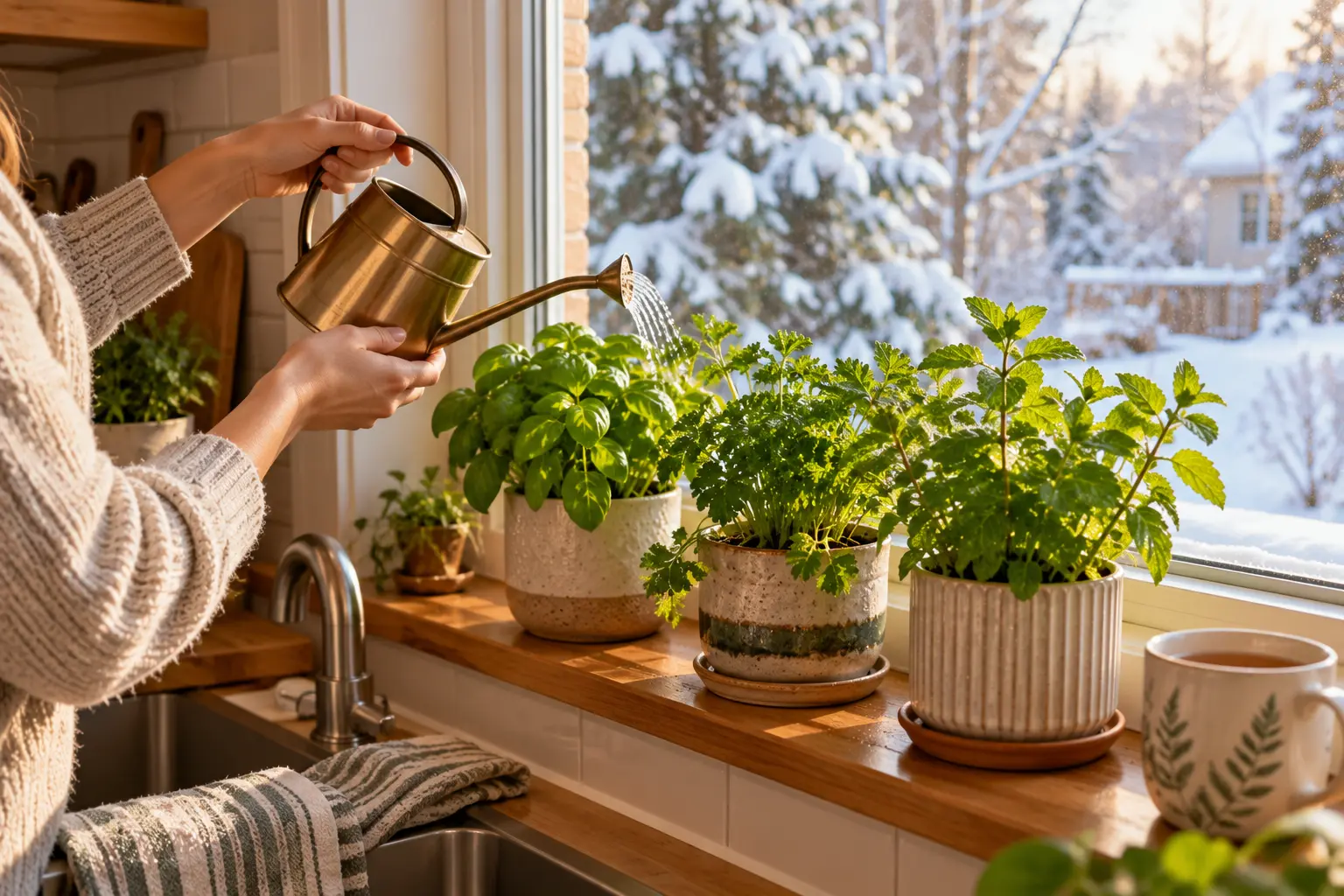
Winter is when many Canadians feel lowest, and it's exactly when gardening can help most. You can keep growing indoors:
- Houseplants: Start with forgiving choices from our list of low-light houseplants or the best houseplants for dry air.
- Windowsill herbs and microgreens: Fresh greens in February are a real lift.
- Overwintered plants: Bring geraniums and rosemary inside. See our guide to overwintering geraniums.
- Planning and seed starting: Browsing seed catalogues and starting seeds in late winter gives you something to look forward to.
Easy low-stress garden ideas
| Idea | Time per week | Why it helps |
|---|---|---|
| A pot of herbs by the door | 10 minutes | Daily contact and something to use in cooking |
| A small pollinator bed | 30 minutes | Watching bees and butterflies is calming |
| A sit spot among plants | Any | Space to rest without a to-do list |
| A low-maintenance rock garden | 15 minutes | Beauty with very little work; see our rock garden ideas |
| Indoor houseplant corner | 15 minutes | Keeps the habit going in winter |
FAQ: gardening for mental health
Is gardening good for anxiety and depression?
Research reviews link gardening with reduced symptoms of anxiety and depression. Gardening can be a helpful part of looking after yourself, but it isn't a substitute for treatment. If you're struggling, talk to your doctor or a mental health professional.
How much gardening do you need to feel the benefits?
There's no exact dose, but regular, short sessions matter more than occasional long ones. Canada's PaRx program suggests at least two hours a week in nature, at least 20 minutes at a time.
Can indoor gardening help mental health?
Yes. Caring for houseplants and growing herbs indoors brings many of the same benefits: routine, purpose, a calm focus and contact with living things. That makes indoor gardening for mental health especially useful in winter.
What are the best plants for beginners?
For indoors: snake plants, pothos and herbs like basil. For outdoors: marigolds, cherry tomatoes, herbs and spring bulbs. Pick a few and build confidence before expanding.
Gardening supports well-being but isn't medical advice. If you're in crisis or need support, contact your doctor, a mental health professional, or call or text 9-8-8 (the Suicide Crisis Helpline, available across Canada 24/7).