
Faux Plant Landscaping: 9 Best Ideas, Pros and Cons, and How to Make It Look Real
IQuick answer: Faux plant landscaping uses high-quality artificial plants, often mixed with real ones, to create a green space that needs no watering, pruning or winter care. It works best in tough spots: shady balconies, windy condo terraces, entryways and indoor areas with no light. To make it look real, choose UV-rated plants, use natural top-dressing like mulch or stones, vary the textures, and mix in a few living plants.
Key takeaways
- Faux plant landscaping is ideal where real plants struggle, not as a replacement for a whole garden.
- Only buy outdoor plants labelled UV-rated or UV-resistant. Cheap ones fade in a single Canadian summer.
- Mixing real and faux plants is the most convincing look.
- Artificial plants don't support pollinators or wildlife, so keep them to the hard-to-grow spots.
Table of Contents
What is faux plant landscaping?
Faux plant landscaping means using artificial greenery (boxwood balls, grasses, ferns, topiaries, hanging vines and even small trees) as part of an indoor or outdoor design. Today's better-quality faux plants use realistic colours, textures and leaf shapes, so from a few steps away they're hard to tell from the real thing.
Pros and cons of faux plant landscaping
| Pros | Cons |
|---|---|
| No watering, pruning or fertilizing | Higher upfront cost for good-quality plants |
| Works in deep shade, wind and no-light spaces | Cheap plastic fades and cracks in sun and cold |
| Looks the same all year, even in winter | No benefit to bees, butterflies or birds |
| Pet-safe alternative to toxic houseplants | Needs dusting and occasional cleaning |
| Good for rentals, condos and businesses | Plastic adds to waste at the end of its life |
On the environment: Faux plants are made of plastic, and plastic pollution is a growing concern in Canada. See the Government of Canada's science assessment of plastic pollution. Buy fewer, better-quality pieces that last for years, and use them only where real plants genuinely won't grow.
On pets: Many popular houseplants are toxic to cats and dogs. You can check yours on the ASPCA's toxic and non-toxic plants list. In homes with curious pets, faux plant landscaping can be a safe way to add greenery. Just watch for pets chewing small plastic pieces.
9 best faux plant landscaping ideas
- Entryway topiaries: A matching pair of faux boxwood balls or spirals in tall planters frames a front door all year, even under snow.
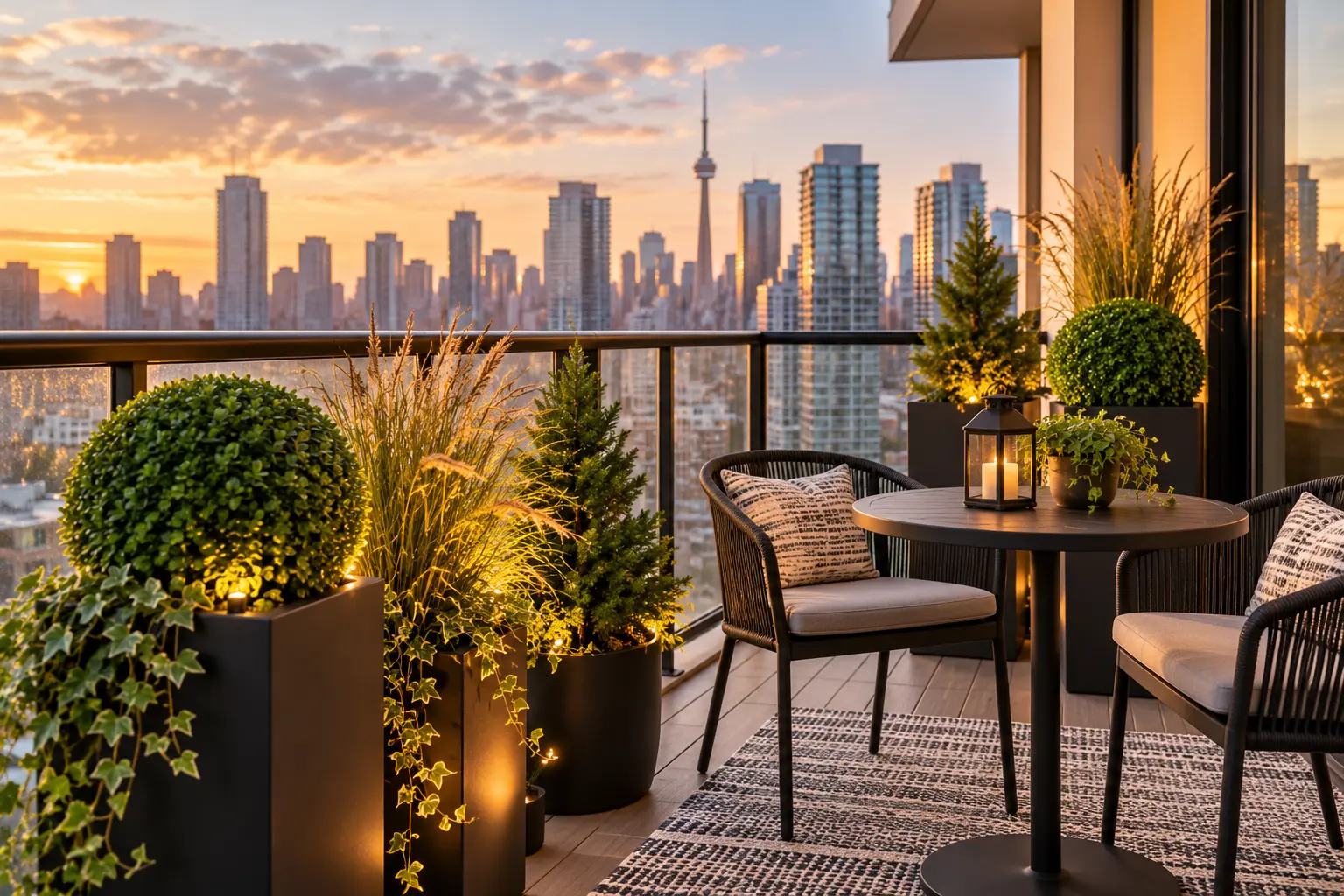
- Shady balcony screens: Faux hedges or ivy panels on railings add privacy where real plants get scorched by wind or never see the sun.
- Condo terrace planters: Mix faux ornamental grasses with one or two real potted evergreens for movement and life.
- Window boxes in winter: Swap summer flowers for faux evergreen boughs, berries and birch branches from November to March.
- Indoor statement plants: A faux fiddle-leaf fig or olive tree fills a dark corner where a real one would drop its leaves.
- Hanging baskets out of reach: Faux trailing vines in high baskets avoid the hassle of watering from a ladder.
- Living-wall look indoors: Faux green wall panels add a lush backdrop to offices, home offices and feature walls.
- Commercial frontages: Restaurants, salons and clinics use faux planters for a consistently tidy look with no maintenance staff.
- Seasonal accents: Faux fall mums, pumpkin displays and winter greenery give you quick seasonal changes without waste.
How to make faux plant landscaping look real
- Choose quality: Look for varied leaf colours, visible veins and natural stems. Avoid uniform shiny green.
- Use real top-dressing: Cover the foam or base with real soil, moss, bark mulch or river stones.
- Mix real and faux: One living plant among faux ones makes the whole display believable.
- Vary heights and textures: Combine grasses, round shrubs and trailing plants, just as you would in a real bed.
- Match the season: Lush tropical faux plants look odd on a Canadian porch in January. Use evergreen styles outdoors in winter.
- Keep them clean: Dust indoor plants monthly, and rinse outdoor plants a few times a season.
Faux plant landscaping in a Canadian climate
Canadian weather is hard on artificial plants. Here's how to make them last:
- UV rating matters: Strong summer sun fades cheap faux plants within months. Buy UV-rated products and consider a UV protectant spray each spring.
- Freeze-thaw: Use frost-proof planters (fibreglass, resin or thick concrete). Ceramic pots can crack when wet soil freezes.
- Wind: Weight planters with gravel or sandbags, and secure tall pieces, especially on high-rise balconies.
- Snow load: Brush heavy snow off faux shrubs so stems don't bend permanently.
For low-maintenance options with real plants, see our rock garden ideas and our list of low-light houseplants for dark indoor spots.
FAQ: faux plant landscaping
Can faux plants stay outside all winter in Canada?
Good-quality, UV-rated faux plants can stay outside year-round if they're in frost-proof planters and secured against wind. Cheaper ones may become brittle in deep cold.
How long does faux plant landscaping last?
Indoors, quality artificial plants can last many years. Outdoors, UV-rated plants often last several seasons before fading. Exact lifespans vary by brand and exposure.
Is faux plant landscaping eco-friendly?
Not really. Artificial plants are plastic and don't support wildlife. The most responsible approach is to use faux plants only in spaces where real plants can't survive, and buy durable pieces you'll keep for years.
Is it better to mix real and fake plants?
Yes. A mix looks the most natural, and real plants still give you the benefits of living greenery.
Want something low-maintenance but real? Try our guide to gardening for mental health for simple, easy-care ideas.